


 Loading...
Rotator cuff tears
Shoulder instability
Calcific tendonitis
Adhesive capsulitis or 'Frozen' shoulder
Acromioclavicular joint osteoarthritis
Shoulder arthritis
Clavicle fractures
Shoulder fractures
Acromioclavicular joint instability
Rotator cuff tears
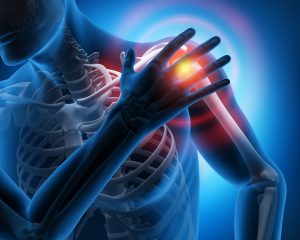
The rotator cuff are a group of four muscles and tendons that both stabilise the shoulder and aid in shoulder motion. Rotator cuff complaints are common and range from tendinopathy to full thickness tears. Tendinopathy results from wear and tear in the tendon which is subsequently unable to fully repair itself. Rotator cuff tears can be partial or complete and either occur after an injury or because of a prolonged period of wear and tear.
Symptoms and Signs
A range of symptoms may be experienced, and these can have a significant impact on quality of life and the ability to carry out daily activities. Pain is common and can be particularly bad at nighttime or during any activities above shoulder level. Reduced movement and weakness are frequently experienced.
Investigations
Although clinical examination is the key to diagnosis in shoulder conditions, the use of X-ray and either magnetic resonance imaging (MRI) or ultrasound scan is usually required for confirmation of the diagnosis.
Treatment Options
A variety of treatment options are available, and the choice is dependent on patient wishes and the severity of symptoms.
Nonsurgical treatments improve symptoms in most cases and can include:
- Physiotherapy to restore strength and motion
- Cortisone injections to reduce swelling and pain
- Analgesia
Surgical repair is considered if nonsurgical treatments have failed or in certain types of tears. The aim of surgery is to ease pain and restore as much movement and strength as possible. Surgery usually involves arthroscopic (keyhole) surgery to firstly assess the shoulder joint before repairing the rotator cuff tear.

Surgical recovery
Most rotator cuff repairs are performed arthroscopically and as day case procedures. A sling is required for around 6 weeks to protect the healing tendon and during this period guided shoulder, elbow, hand and wrist motion is encouraged. Shoulder movement is performed under the guidance of a physiotherapy and full recovery can take 4 to 6 months. Return to work is dependent on the specific job role and can take up to six months for those performing particularly physical work.
Shoulder instability
Instability of the shoulder occurs when the joint is unable to maintain the humeral head (ball) within the glenoid (socket). Although the shallow socket allows a wide range of motion, this places the shoulder at risk of dislocation and subsequent instability. The socket is surrounded by the structures known as the labrum and capsule which act to increase the socket depth and control humeral head movements. Dislocations commonly occur in young patients after sporting or traumatic injuries and can involve injuries to the labrum, capsule and the underlying bones.
Symptoms
The shoulder may repeatedly dislocate and may lead to patients not trusting their shoulders in particular positions. This apprehension can limit what sport, activities and work patients are able to participate in.
Investigations
X-rays are required to assess for any underlying injury to either the humeral head or glenoid socket. If a bony injury is identified, then a CT scan may be requested for further information on the severity of this injury. An MRI scan which involves an injection of dye into the shoulder is frequently used to assess for any underlying injury to the labrum and capsule.

Treatment Options
Physiotherapy can be helpful in returning the shoulder to motion and strength after a dislocation. In addition, physiotherapy can target improved control of the shoulder for patients who have recurrent problems where an underlying injury to the labrum and capsule has not been identified.
Surgical repair usually is performed arthroscopically (keyhole) which involves repairing of the labrum and capsule back to edge of the socket. If a significant bony injury is present then a labral repair may not be sufficient to resolve the symptoms and a transfer of bone from the front of the shoulder blade (coracoid) to the socket may be required and is typically performed as an open procedure.
Surgical recovery
Arthroscopic surgery is usually performed as a day case procedure. A sling is used for 6 weeks post-operatively although movement during this period is allowed under the direct guidance of the physiotherapists. Full recovery can take a few months and return to sport and physical work can take 4-6 months.
Calcific tendonitis
Calcific tendonitis refers to a build up of calcium within the rotator cuff tendons around the shoulder. The cause of this is unknown but it is thought that the condition can lead to pain due to a build of pressure within the tendon or local irritation caused by the calcium.

Symptoms and Signs
Calcific tendonitis can cause shoulder pain which can be particularly acute and severe. In addition, the calcium may reduce the space between the rotator cuff tendons and the acromion (part of the shoulder blade) causing catching known as impingement which can also be painful and limit movement.
Investigations
The calcific deposits can usually be visualized on X-ray. However, ultrasound is a more accurate method to identify the exact size and location of the calcium whilst it can facilitate some treatment options.
Treatment Options
Various treatment options are available and include:
- Analgesia
- Physiotherapy which aims to maintain shoulder motion and avoid impingement
- Cortisone injection to reduce swelling and pain
- Ultrasound guided barbotage which involves inserting a needle into the calcium deposit multiple times to reduce the pressure within the tendon
- Surgical excision which is usually performed using an arthroscopic (keyhole) technique
Surgical recovery
Surgery is usually arthroscopic and performed as a day case procedure. A sling is provided for comfort, but movement is encouraged early under the guidance of a physiotherapist. Recovery is gradual and can take a few months. Return to work is dependent on the specific job.
Adhesive capsulitis or ‘Frozen’ shoulder
Adhesive capsulitis is caused by thickening of the lining or capsule of the shoulder joint and can result in severely restricted range of motion within the shoulder joint. The cause for the condition is usually unknown but the condition can be associated with trauma, previous surgery or diabetes.
Symptoms and Signs
Adhesive capsulitis can be an extremely painful condition, particularly in the initial stages. Severe stiffness and loss of motion within the joint is typical and can have a profound effect on patient’s ability to function even with daily tasks such as washing and dressing.
Investigations
Diagnosis is made after clinical examination, but an X-ray is required to exclude arthritis that can present a similar clinical picture.
Treatment Options
Although adhesive capsulitis is usually self-resolving, the timing and completeness of recovery is unpredictable. Symptoms can be so intrusive that treatment maybe warranted and can include:
- Physiotherapy which aims to stretch the shoulder joint to regain motion
- Analgesia
- Cortisone injection to reduce swelling and pain
- Surgery if nonsurgical options have failed
- Manipulation of the joint under anaesthesia
- Arthroscopic (keyhole) release of the thickened lining of the joint
Surgical recovery
Surgery is usually performed as an arthroscopic day case procedure. A sling is provided for comfort but early motion is encouraged under the guidance of a physiotherapist and this therapy is key to maintaining improvement in movement.
Acromioclavicular joint osteoarthritis
Acromioclavicular (AC) joint osteoarthritis describes wear and tear of the joint between the acromion (front of the shoulder blade) and the clavicle (collarbone) which is located at the top of the shoulder.
Symptoms and Signs
Pain is the main symptom for most patients and is typically experienced directly over the AC joint. Symptoms are worsened with repetitive overhead activities which can load (put pressure) on this joint.
Investigations
An X-ray will usually demonstrate the osteoarthritis. An MRI scan is occasionally required to assess the underlying rotator cuff tendons to exclude other problems.
Treatment Options
Treatment is dependent on patient wishes and severity of symptoms, but options include:
- Analgesia
- Activity modifications
- Cortisone injections to reduce pain and swelling
- Surgical excision can be performed if nonsurgical options have failed. This is typically performed arthroscopically (keyhole) when the outer part of the clavicle is removed to prevent the joint surfaces rubbing
Surgical recovery
AC joint excision is usually performed as an arthroscopic day case procedure. A sling is provided for comfort, but early motion is encouraged under the guidance of a physiotherapist. Full recovery can take between 3 and 6 months but most patients return to work within this period.
Shoulder arthritis
Shoulder arthritis results from damage to the surface layer of the joint (cartilage). This damage leads to loss of the smooth joint surface resulting in rubbing of the underlying bone which may remodel into an abnormal shape. These changes may lead to significant pain and loss of motion. This process can be secondary to wear and tear, after failure of the rotator cuff muscles, after trauma or after inflammatory conditions such as rheumatoid arthritis.
Symptoms
Shoulder arthritis can lead to significant pain which can be debilitating particularly affecting the ability of patients to perform daily activities and sleep. Arthritis can result in reduced motion from the shoulder as well as catching and clunking sensations.
Investigations
Arthritis is usually evident on an X-ray but the use of both CT and MRI scans maybe requested if surgical treatments are planned to ensure the optimal type of replacement is chosen.
Treatment Options
Choice of treatment is dependent on patient wishes and the symptom severity but include:
- Physiotherapy which aims to maintain range of motion
- Analgesia
- Cortisone injections which may provide temporary pain relief
- Arthroscopic (keyhole) debridement of bony spurs in early stages of arthritis
- Shoulder replacements which are either anatomic or reverse in design
Surgical recovery
Shoulder replacements are performed through open surgery and usually involve a few days in hospital. A sling is required for up to 6 weeks during which time elbow, wrist and hand movements are encouraged but shoulder motion is performed under the guidance of a physiotherapist. Recovery is gradual and can take up to 4- 6 months to complete.
Clavicle fractures
Clavicle fractures usually occur following a fall, vehicle collision or sporting injury.
Symptoms and Signs
The main symptom is pain over the clavicle which is made worse by shoulder movement. There is tenderness, swelling, bruising and deformity (abnormal shape) around the clavicle.
Investigations
The fracture is evident on plain X-ray but occasionally CT scans are requested to assess the position or healing of fractures if the fracture is slow to heal or presentation is late.
Treatment Options
Most clavicle fractures are managed without surgery and result in good healing and return to function. However certain fracture types have a higher chance of not healing and may benefit from fixation with plates and screws to enhance recovery.
Surgical recovery
Clavicle fixation is usually performed as a day case procedure. A sling will be provided for comfort, but gentle shoulder motion will be allowed after 2 weeks under physiotherapy guidance. Timing of return to work is dependent on occupation but may take 4-5 months if work is physical.
Shoulder fractures
Proximal humeral (shoulder) fractures typically occur after a fall or vehicle collision.
Symptoms and Signs
The main symptom is pain over the upper arm which is made worse by shoulder movement. There is tenderness, swelling and bruising over the upper arm.
Investigations
The fracture is evident on plain X-ray but occasionally CT scans are requested if surgical fixation is considered to aid planning of surgery.
Treatment Options
Most proximal humeral fractures are managed without surgery and physiotherapy is important to achieve optimal function. However certain fractures which are displaced may benefit from surgical fixation with plates and screws to optimise fracture position and healing. Displaced fractures or those associated with dislocations in older patients may not be amenable to surgical fixation and shoulder replacement provides an alternative surgical option in this group of patients.
Surgical recovery
Proximal humeral fracture fixation may require an overnight stay in hospital. A sling will be provided for comfort for 6 weeks, but gentle shoulder motion will usually be allowed after 2 weeks under physiotherapy guidance. Timing of return to work is dependent on occupation but may take 4-5 months if work is physical.
Acromioclavicular joint instability
Injuries to the joint between the acromion (anterior part of shoulder blade) and clavicle (collarbone) usually occurs after a fall, sporting injury or vehicle collision. Instability results from injury to the capsule of the AC joint as well as the ligaments that stabilise the clavicle to the shoulder blade.
Symptoms and Signs
Pain and swelling are located at the AC joint over the top of the shoulder where a deformity (abnormal shape) is present due to the joint disruption/dislocation.
Investigations
The injury and displacement of the joint is demonstrated on an X-ray.
Treatment Options
Most lower grade injuries are managed without surgery with analgesia and rehabilitation is performed under the guidance of a physiotherapist. Higher grade injuries involving dislocation of the joint may benefit from surgical reconstruction either early (acute) after the injury or in a delayed manner if symptoms have not improved after nonsurgical treatment. Surgery in the early period realigns the AC joint allowing the injured ligaments to heal. Whereas later surgery requires reconstruction of these ligaments using synthetic materials.
Surgical recovery
Acromioclavicular reconstruction is usually performed as a day case procedure and a sling is provided for 6 weeks. Elbow, wrist and hand motion is encouraged early, but shoulder motion is commenced from 2 weeks under the guidance of a physiotherapist. Fully recovery can take up to 4 months.